What Actually Defines The Designer Collection
Scroll through the Designer collection and a pattern emerges fairly quickly, this isn’t where you go for a plain solitaire. It’s where shapes get more unusual, motifs carry actual meaning, and settings take real creative risks. Understanding that pattern makes it much easier to know when this collection is the right place to look versus Classic or Solitaire.
Symbolic Motifs Show Up Constantly Here
A genuinely distinctive thread running through this collection is pieces built around a specific symbol rather than pure geometry. An evil eye diamond bracelet, a swastik solitaire stud, each carries cultural or protective meaning that goes beyond decoration. These pieces tend to work best small and personal, a quiet symbol worn daily rather than a loud statement, which is part of why they show up as delicate studs and fine bracelets rather than large centrepieces.
Soft, Decorative Shapes Replace Geometric Simplicity
Where Classic sticks to round and princess cut solitaires, Designer leans into bows, ribbons, and butterflies, shapes built from clusters of smaller diamonds arranged into a recognisable silhouette rather than one dominant stone doing the work. A trio of diamonds forming a bow, or marquise stones arranged into butterfly wings, relies on the overall composition reading well as a whole, which is a genuinely different design approach than letting a single stone’s cut carry the piece.
Pave Settings And Open Silhouettes
Several pieces in this collection use pave work, diamonds set closely together across a curved or sculptural surface, often paired with an open shank design rather than a traditional closed band. A pear cut flower pave ring or an open shank pave design reads as more fluid and contemporary than a conventional solitaire mount, since the metal itself becomes part of the visual shape rather than just a frame for the stone.
Mixed Diamond Shapes In A Single Piece
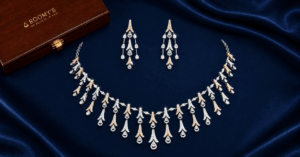
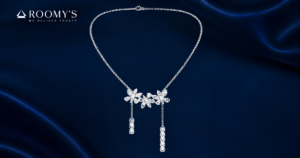
This collection also makes frequent use of combining shapes, marquise and pear stones clustered together in an ear climber, for instance, rather than one consistent cut throughout. Mixing shapes like this creates a more layered, varied sparkle than you’d get from a uniform cut, since each shape catches and releases light slightly differently. The same idea shows up in necklaces built around multiple motifs, like a butterfly trio design combining marquise and crystal elements in one piece. It’s a detail that rewards a closer look rather than registering instantly the way a single large solitaire does.
Cuffs And Climbers, Formats You Won’t Find In Classic
Designer is also where less conventional formats live, dual drop cuff bracelets and ear climbers rather than studs or simple bangles. These formats are built to be noticed, worn for their shape as much as their sparkle, which makes them a genuinely different proposition than a piece meant to disappear into daily rotation.
How To Actually Choose Within This Collection
If you’re drawn to a symbolic piece, think about where you actually want that meaning to sit, a stud you’ll see in the mirror daily, or a bracelet that stays mostly out of sight. If you’re drawn to the more sculptural pave and open shank designs, these tend to read as a complete piece rather than a stone plus setting, so judge the whole silhouette rather than focusing on carat weight of any one diamond within it. And for the mixed shape and cluster pieces, it’s worth seeing them in person if possible, since the way different cuts interact under light is genuinely hard to judge from a photo alone.
People Also Ask
What makes the Designer collection different from Classic? Classic favours simple, geometric solitaires built for daily wear, while Designer leans into symbolic motifs, decorative shapes like bows and butterflies, and more sculptural settings like pave work and open shanks.
What does a symbolic piece like an evil eye or swastik design actually represent? These are traditional protective or auspicious symbols with real cultural roots, which is part of why they tend to be worn as small, personal pieces rather than large statement jewellery.
What is pave setting and why does it show up often in Designer pieces? Pave setting places diamonds closely together across a surface, often on a curved or open silhouette, creating a more fluid, sculptural look than a traditional single stone mount.
Why do some Designer pieces mix diamond shapes like marquise and pear in one design? Combining shapes creates layered, varied sparkle rather than the uniform look of one consistent cut, since each shape interacts with light differently.
Are ear climbers and cuff bracelets practical for everyday wear? They can be, though they’re generally chosen as statement pieces for a specific look rather than items worn in daily rotation the way simpler studs or bangles typically are.
Should I buy a Designer piece as my first diamond purchase? It depends on your style, but many people find it easier to start with a versatile Classic or Solitaire piece first, then add a Designer piece once they know what kind of statement they actually want to make.