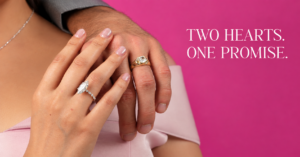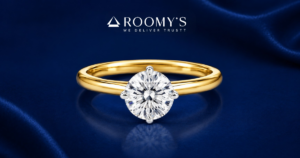
A solitaire has nowhere to hide. One diamond, minimal surrounding detail, nothing else competing for attention.
That simplicity is exactly why it’s such an unforgiving format, and exactly why getting it right matters more than people assume when they first start looking.
The Whole Design Rests On One Stone
Unlike a halo or a cluster setting, where several stones share the visual load, a solitaire puts everything on a single diamond.
That means the stone’s cut quality genuinely can’t be masked by surrounding sparkle the way it might elsewhere, whatever the diamond actually does under light is what the whole piece is judged on.
The Solitaire collection spans a genuinely wide carat range, from smaller everyday pieces under half a carat up to two carat statement stones, but the same principle holds across the whole range, the stone itself is doing all the talking.
Why It Shows Up In Both Rings And Earrings
Solitaire design isn’t limited to engagement rings, even though that’s where most people first encounter the term. It works just as well as a pair of stud earrings, where the same single stone principle applies, one clean diamond, minimal setting, worn constantly rather than saved for occasions.
If you’re building toward a ring, browse rings to see the range of cuts and setting styles available. If studs are more what you’re after, explore earrings covers the same solitaire principle in a daily wear format.
Setting Style Changes More Than People Expect
A four prong setting is the classic choice, minimal metal, maximum light exposure, and it’s genuinely the most flattering option for a well cut stone since almost nothing gets between the diamond and the light hitting it.
A basket setting adds a bit more structure underneath the stone, offering slightly more security for the diamond without sacrificing much of that open, airy look.
For earrings specifically, screw back and push back are really about daily practicality rather than appearance, screw backs sit more securely for constant daily wear, while push backs are quicker to put on and take off, which suits pieces worn more occasionally.
Cut Shape Changes The Whole Personality Of A Solitaire
A round brilliant solitaire throws the most classic, high frequency sparkle, and it’s genuinely the most forgiving shape if you’re also trying to balance clarity against budget, since its faceting naturally hides minor inclusions well.
A princess cut, with its clean geometric lines, reads as a little more modern and structured, with broader flashes of light rather than constant scintillation.
Neither is more correct than the other, it really comes down to whether you want a stone that reads as classic and timeless or one that feels a touch more contemporary.
Carat Size Isn’t The Only Thing Worth Comparing
Because a solitaire is judged purely on its single stone, it’s worth comparing options on cut and setting as much as carat weight.
Two solitaires at a similar carat size can look meaningfully different depending on how the setting frames the stone and how well it’s actually cut, so it’s genuinely worth looking at more than one option side by side rather than deciding purely off the carat number on a listing.
Who Solitaires Actually Suit
Solitaires work well for anyone who wants a piece that reads as deliberate and confident without needing extra detail to make its case.
They suit people who’d rather invest in one excellent stone than spread a similar budget across several smaller accent pieces, and they tend to age extremely well precisely because there’s no trend specific detailing to date over time.
PEOPLE ALSO ASK
A solitaire features a single diamond as the entire visual focus, with minimal surrounding metal or accent stones, unlike a halo or cluster design where multiple stones share the visual impact.
A four prong setting offers maximum light exposure and the most classic look, while a basket setting adds slightly more structural support underneath the stone without significantly changing its appearance.
Screw backs are generally better for daily wear since they sit more securely, while push backs are quicker to put on and take off, which suits earrings worn more occasionally.
Round brilliant cuts offer classic, forgiving sparkle that hides minor inclusions well, while princess cuts have a more modern, structured look with broader light flashes. The choice comes down to personal style rather than one being objectively better.
Yes, both rely on a single diamond as the entire design focus, the main difference is that rings often carry a larger centre stone while earrings are typically sized for comfortable daily wear.