The Solitaire Masterclass : How to Spend Smart on Absolute Sparkle
Shikha September 28, 2026 0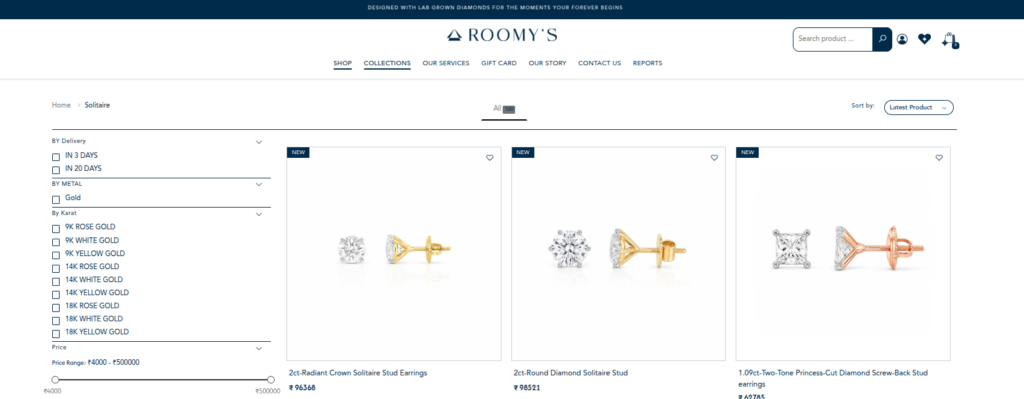
There is something about a solitaire that makes it instantly stand out. Walk into a jewellery showroom or browse a fine jewellery collection online, and a single diamond placed at the centre of a ring, pendant or pair of earrings naturally draws your attention.
That is the appeal of a solitaire. It does not need a cluster of stones to make an impression. One well-cut diamond can do all the talking.
For years, buying a solitaire in India often meant making a difficult choice between size, quality and budget. A larger natural diamond could push the price considerably higher, while staying within a comfortable budget often meant settling for a smaller stone.
Lab-grown diamonds have changed that equation.
Today, collections such as the ROOMY’S Jewellery Solitaire Collection offer a wide range of solitaire jewellery, including rings, earrings and pendants, in different shapes, sizes and metal options.
With lab-grown diamonds available at significantly lower prices than comparable natural diamonds, shoppers can explore larger stones without automatically stretching their budget.
But having more choice can create another problem: how do you know what is actually worth spending your money on?
Here is a practical guide to shopping for a solitaire without getting carried away by the sparkle alone.
1. Start With Your Budget, Not the Carat Size
It is tempting to begin solitaire shopping by deciding that you want a 1-carat or 2-carat diamond. A better approach is to decide how much you are genuinely comfortable spending first.
Natural diamonds can vary significantly in price depending on their carat weight, colour, clarity and cut. A 1-carat natural diamond solitaire ring, for example, can cost several lakhs depending on its specifications and the jewellery design.
Lab-grown diamonds provide another option. They have essentially the same chemical composition and crystal structure as natural diamonds, while being created in a controlled laboratory environment.
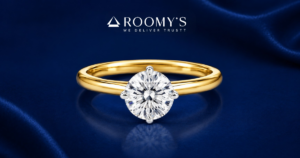
ROOMY’S, for example, lists solitaire designs at a range of price points. The 1ct Classic Four-Prong Solitaire Ring is listed at ₹60,351 at the time of writing.
That difference can be meaningful for someone who wants the look of a substantial solitaire without putting several lakhs into a single piece of jewellery.
The important point is not simply to chase the biggest diamond available. Think about how much of your overall jewellery budget you actually want tied up in one piece.
2. For Earrings, Look Beyond the 1-Carat Mark
Solitaire studs are one of those jewellery pieces where a relatively small difference in carat weight can have a noticeable effect on the price.
If you are looking for a more dramatic pair, the 2ct Round Diamond Solitaire Studs in ROOMY’S collection are listed at ₹98,521. They create a much more noticeable presence around the face and work particularly well when you want your earrings to be the main feature of your look.
But bigger is not always necessary.
The 0.99ct Signature Round Diamond Screw-Back Studs, listed at ₹58,358, sit just below the 1-carat mark. For someone who wants a substantial solitaire appearance while keeping the budget under control, this can be an interesting point to consider.
When comparing earrings, remember that the stated carat weight may refer to the total weight of both earrings. Always check the product specifications so you know exactly what you are buying.
3. Choose the Diamond Shape Based on the Look You Want
Carat weight is only one part of a diamond’s appearance. Shape can completely change how a solitaire looks when worn.
Round : The Classic Choice
Round brilliant diamonds remain one of the most recognisable choices for solitaire jewellery. Their faceting pattern is designed to maximise light return, giving them the lively sparkle most people immediately associate with diamonds.
If you want something timeless that can move easily from everyday outfits to special occasions, a round solitaire is difficult to go wrong with from a styling perspective.
Princess : Clean and Contemporary
Princess-cut diamonds offer a square silhouette with crisp corners and a distinctly modern appearance.
For example, ROOMY’S 1.05ct Timeless Princess Diamond Studs are listed at ₹60,972. The shape gives the earrings a more structured appearance than traditional round studs while still retaining plenty of sparkle.
Radiant : Somewhere Between Classic and Modern
Radiant cuts are an interesting choice if you want something less conventional without moving too far away from the brilliance associated with a round diamond.
The 2ct Radiant Crown Solitaire Stud Earrings, listed at ₹96,368, combine a rectangular or square outline with brilliant-style faceting. The result is a shape that feels contemporary while still offering plenty of visual sparkle.
Ultimately, the right shape comes down to personal style. Look at the jewellery you already wear. If most of your pieces are soft and traditional, a round or oval solitaire may fit naturally into your collection. If you prefer sharper, architectural designs, princess or radiant shapes may feel more appropriate.
4. Don’t Overlook the Metal
Once you have chosen your diamond, the next decision is the metal.
ROOMY’S solitaire jewellery is available in different combinations of karat and metal colour, including 18K, 14K and 9K options in white, yellow and rose gold.
Each creates a different overall effect.
White gold gives a clean, understated appearance and works particularly well with colourless-looking diamonds. It also creates a seamless visual transition between the setting and the diamond.
Yellow gold brings warmth and a more traditional Indian jewellery feel. It can also create an attractive contrast against a bright diamond.
Rose gold has a softer, romantic character. A design such as the 0.61ct Heart Shaped Diamond Ring in Rose Gold, listed at ₹42,149, uses that warmth to create a distinctly feminine look.
There is no universal “best” metal. Your skin tone, existing jewellery collection and personal style should all play a part in the decision.
5. Pay Attention to the Four Cs
A solitaire is all about one central stone, which means the diamond itself deserves close attention.
Before purchasing, look beyond the carat number and consider the 4Cs: Cut, Colour, Clarity and Carat.
Cut affects how effectively the diamond interacts with light and is one of the most important factors when it comes to sparkle.
Colour describes how colourless the diamond appears. Higher colour grades are generally closer to colourless, although the difference may be subtle depending on the stone and setting.
Clarity refers to internal and external characteristics. A diamond does not necessarily need the highest clarity grade to look beautiful to the naked eye.
Carat refers to weight, not directly to visual size. Two diamonds with the same carat weight can look different depending on their proportions and shape.
This is why choosing a diamond simply because it has a larger carat number is not always the smartest approach.
6. Check the Certification Before You Buy
A diamond certificate gives you important information about the stone you are purchasing.
For lab-grown diamonds, look for certification from a recognised gemological laboratory and check details such as the diamond’s carat weight, colour, clarity, cut and measurements.
If a product is advertised as certified, make sure the certification details correspond with the actual stone or product documentation.
This small step can make the purchasing process much more transparent and gives you a clearer understanding of what you are paying for.
7. Look at the Complete Jewellery Price
The diamond is only part of the final price.
When comparing solitaire jewellery, consider the complete product price, including the gold, making charges, setting and any applicable taxes or other costs.
Promotional offers can also change the final amount. If a collection is offering a discount on making charges, check the terms carefully rather than assuming that the advertised percentage applies to the entire product price.
It is also worth checking the product page for current shipping, return, exchange and buyback policies before placing an order.
A little attention at this stage can prevent surprises later.
8. Buy for the Occasion You Actually Have in Mind
A solitaire engagement ring and a solitaire pair of everyday studs may both feature a single diamond, but they serve very different purposes.
For an engagement ring, think about proportions, comfort and whether the design will work with your everyday wardrobe.
For a gift, consider the recipient’s existing jewellery. Someone who usually wears minimal pieces may appreciate a classic round solitaire, while a person who prefers contemporary jewellery might enjoy a more unusual shape.
For daily wear, practicality becomes more important. Look closely at the setting, fastening mechanism and overall construction.
The most expensive-looking piece is not necessarily the piece you will enjoy wearing the most.
The Smart Way to Shop For Solitaire
The biggest advantage of having more options today is that you do not have to make every decision based on carat size.
Instead, start with your budget. Decide what style you like. Compare diamond shapes, certification and specifications. Then look at the metal and overall design.
Lab-grown diamonds have made larger solitaire jewellery more accessible to many shoppers, but the same basic rule still applies : buy the diamond and design that make sense for you, rather than simply buying the biggest number on the product page.
ROOMY’S Jewellery’s solitaire collection gives shoppers plenty of options to explore, from classic round designs to princess, radiant and heart-shaped styles across rings, earrings and other jewellery.
And that is perhaps the best way to think about a solitaire. It does not have to be the biggest diamond in the room. It simply has to be the one that feels right when you put it on.
PEOPLE ALSO ASK
A solitaire diamond is a jewellery design featuring one main diamond as the centrepiece. It is commonly used in engagement rings, earrings and pendants, allowing the individual diamond to remain the focus of the design.
Yes. Lab-grown diamonds are diamonds with essentially the same chemical composition and crystal structure as natural diamonds. The main difference is their origin: natural diamonds form underground, while lab-grown diamonds are created in controlled laboratory environments.
Generally, yes. Lab-grown diamonds are typically priced lower than comparable natural diamonds, which can allow buyers to choose a larger or higher-specification stone within the same budget. The exact price difference depends on the diamond's specifications and the jewellery design.
Pay attention to the 4Cs : Cut, Colour, Clarity and Carat. Also check the diamond's certification, measurements, metal type, setting and the overall price of the jewellery before making a purchase.
There is no single best shape. Round diamonds offer a classic look, princess cuts have a clean and contemporary appearance, while radiant, oval and heart-shaped diamonds can give the jewellery a more distinctive character. Your personal style should be the main deciding factor.