Why Solitaire Jewellery Never Really Goes Out Of Style
Of all the ways to set a diamond, the solitaire is really the simplest idea there is, one stone, minimal metal, nothing else competing for attention. It sounds almost too basic to be a design choice at all, but that restraint is exactly why it’s remained one of the most enduring formats in fine jewellery rather than a passing style.
The Whole Idea Is Restraint
A solitaire earring or ring isn’t trying to do very much, and that’s deliberate. Every other design decision, the halo, the accent stones, the shank detail, exists to add something around the centre diamond. A solitaire strips all of that away and puts the entire weight of the piece on the stone itself. That makes it an honest format in a way busier designs aren’t, there’s nowhere for a mediocre stone to hide, and nothing needed to make a genuinely good one look better than it already does.
Why It Shows Up So Often In Everyday Pieces
Look through the Solitaire collection and the pattern is obvious, this format dominates stud earrings more than almost any other jewellery type. Round and princess cut solitaire studs, in particular, are genuinely built for daily wear, a single clean stone that works under any outfit without needing to be thought about. Their simplicity is exactly what makes them so wearable, they don’t compete with anything else you’re wearing, which is a rare quality once you start comparing them to more elaborate designs.
Where Solitaires Show Up Beyond Earrings
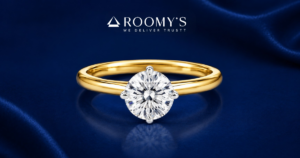
The same idea carries over into rings, where a single stone set in a straightforward prong or four prong mount lets the diamond’s cut and proportions do all the visual work. Whether it’s a round brilliant, a cushion cut, or a heart shape, the format stays consistent, one stone, minimal distraction. If you’re building toward an engagement piece or simply want a ring that reads as timeless rather than trend driven, browse rings within this same collection.
Why Cut Quality Matters More Here Than Anywhere Else
We’ve made this point before about other settings, but it’s especially true for a solitaire, since there’s genuinely nowhere else for the eye to go. A halo can distract slightly from a mediocre cut. A cluster of accent stones can add sparkle that compensates a little. A solitaire offers none of that camouflage, so if you’re choosing this format specifically, cut grade deserves more attention than carat size does. A smaller, beautifully cut solitaire will consistently outperform a larger, poorly cut one, since the entire design depends on that one stone performing well under light.
Screw Backs Versus Push Backs, A Small Detail Worth Knowing
For solitaire studs specifically, the closure matters more than people expect. Screw back posts hold more securely over a full day of wear and movement, which matters if the earrings are going into daily rotation rather than occasional use. Push backs are simpler to put on and take off but can work slightly looser over time with heavy daily wear. If you’re buying studs you plan to wear constantly rather than save for occasions, a screw back is generally worth the small extra step of putting them on.
Why This Format Works Across Every Metal Tone
Because a solitaire has so little surrounding detail, it adapts easily to whichever metal tone you already wear most. Rose gold gives it a softer, warmer read. White gold keeps it crisp and neutral. Yellow gold leans more traditional. None of these choices change the fundamental design, which is really the point, the format is built to flex around personal preference rather than dictate a single look.
People Also Ask
What makes a piece of jewellery a solitaire? A solitaire features a single diamond as the entire focus of the design, set with minimal surrounding metal or accent stones, rather than being paired with a halo, cluster, or multiple stones.
Are solitaire earrings good for everyday wear? Yes, they’re genuinely built for it. Their simplicity means they pair easily with any outfit without competing for attention, which is why they’re one of the most common everyday jewellery choices.
Does cut quality matter more for a solitaire than other settings? Yes. Since there’s no halo or accent detail to add extra sparkle or distract the eye, a solitaire depends entirely on the centre stone’s cut to perform well under light.
Should I choose screw back or push back solitaire studs? Screw backs generally hold more securely for daily wear, while push backs are quicker to put on but can loosen slightly more over time with frequent use.
Is a smaller, well cut solitaire better than a larger, poorly cut one? Generally yes. A solitaire’s entire visual impact comes from the stone’s cut quality, so a smaller diamond with an excellent cut will typically outperform a larger one with a weaker cut.
Does metal tone change the look of a solitaire much? Not dramatically, since the design itself stays simple across all metal tones. It mainly shifts the overall warmth of the piece, rose gold reading softer, white gold cooler, and yellow gold more traditional.